
12 Nov 2026
New rules
Magic comes from your Mage Towers, slower marches give you time to send help, and Renown is the new score.
What changed in the game, and when.
Magic comes from your Mage Towers, slower marches give you time to send help, and Renown is the new score.
The Guide is corrected in several places: the Barracks table now shows recruit speed, Recall's card says it works on your own army only, and the siege rule says every city needs a siege, with or without a Wall.
A Mage Tower can no longer rise above its city's Keep.
On phones, screens other than the map open a little faster: they no longer download the map until you open it.
The score is now Renown: what you have built — every building in your cities and half your research, at what it cost, as a fading three-day average — plus what you have destroyed.
Signing in to keep your account now works when you open the game from inside the Reddit app.
Opening a spell now asks for all its prices at once, so the targets' prices come up together and sooner.
Other players' protected armies and cities now carry a shield on the map.
The chat now opens on your Guild tab when you're in a guild, so plans meant for your guild stop landing in World chat.
The Magic tab's painting for human, orc and undead cities is redrawn: the staff now leans against the wall like the weapons on Recruit, with room above it.
Tap a player's name on a city, an army, the guild page, the rankings or in chat to see their profile without leaving the game.
First steps now runs only in your first world: when you join another, it starts off, with one line on the map to bring it back.
The Hall of Fame now lists the worlds being played.
A store about to fill now shows amber in the top bar — when it will be full within four hours or stands at nine tenths of its cap — before it turns red at full.
The Guide has a battle calculator again, simpler than before: enter your army and theirs to see who wins a field fight, a siege, a raid or a bandit camp, and how many each side loses.
The game speaks one language now: one familiar name for each thing, from assault and loot to resources, rounds and the Hall of Fame, and battles end as a decisive or close victory or defeat everywhere — before the fight, in the notice and in the report.
Reports now shows every city's building and training queue, and your science, on one board, with what is running and how long it has left.
On a phone, every screen now fills the whole page between your resources and the bar, and the bar's first tab is the Map: Map, Build, Recruit, Reports, Chat and Menu.
The front page has new paintings in the game's night colours — a city under siege, each race's warband by its fire, and new race emblems — and the map on it now shows the game's true colours.
The game has been redesigned: new paintings everywhere, screens that open over the map, and fewer things between you and your next order.
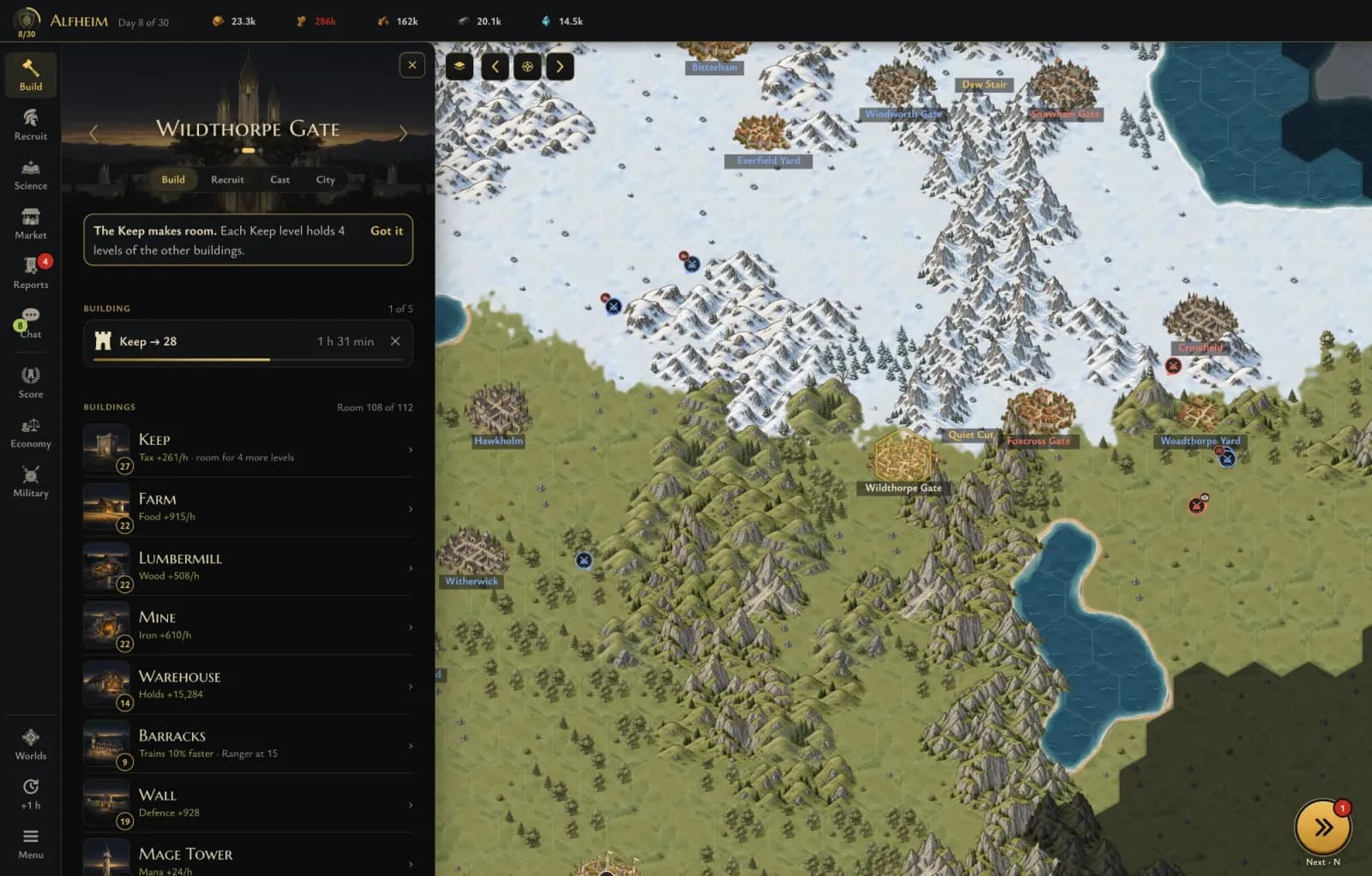
The map could crash while its painted ground was still loading, most often on a first visit or a slow device.
Science now has a queue, like building and recruiting: line up to three studies across the three tracks, each paid when you place it.
Arcane Eye reports are easier to read.
On a phone, the front page now opens with Play on the first screen: the painting sits behind the words, and you start with one tap.
Guilds & Blades has been rebuilt from scratch as a new game: thirty-day rounds, a few decisions a day, and a fight you can read before you march.
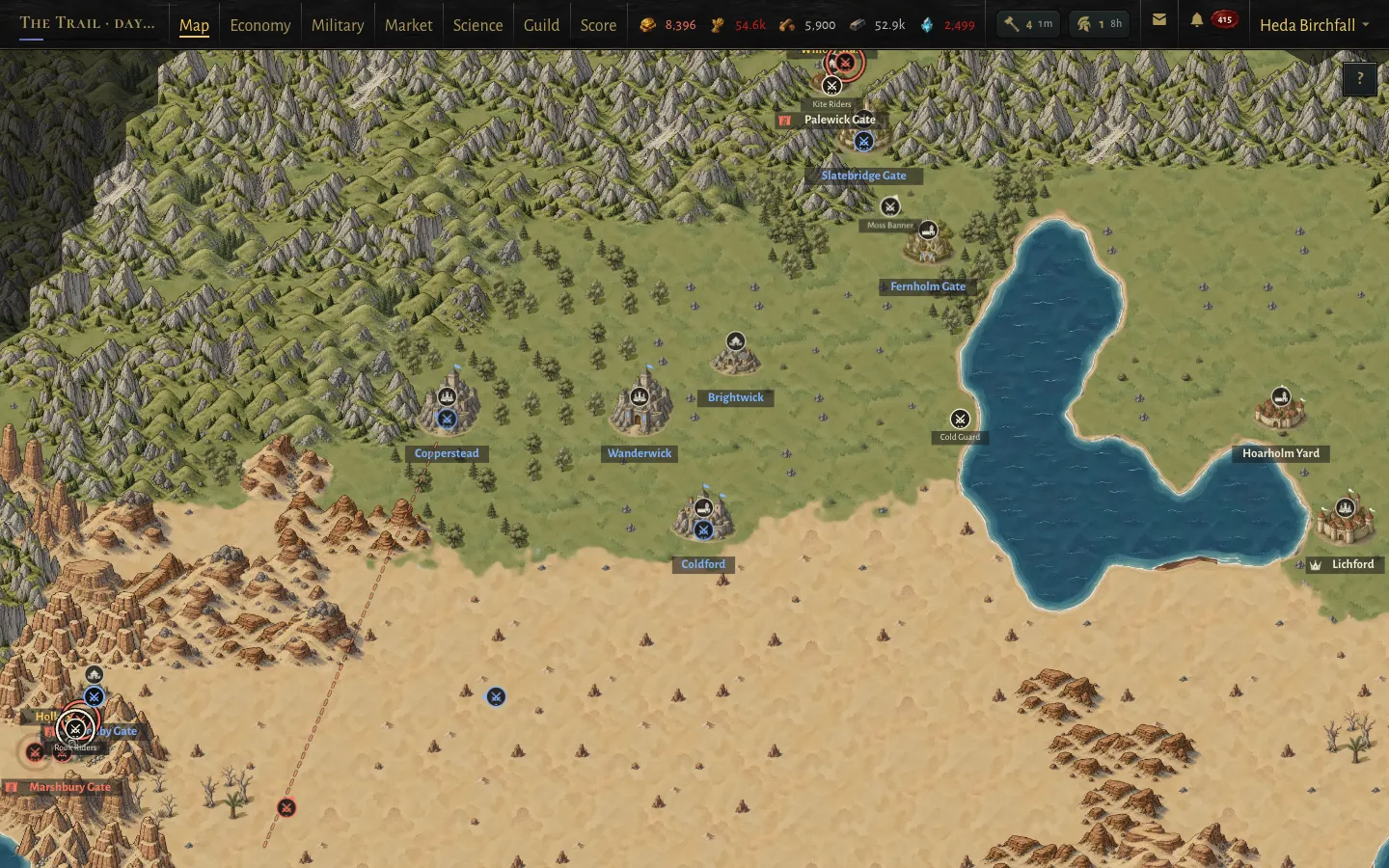
Posts from before the 2026 rebuild. The screenshots show the game's old look.
Interactive guides for new players take the place of a tutorial, and the menu suits phones better.
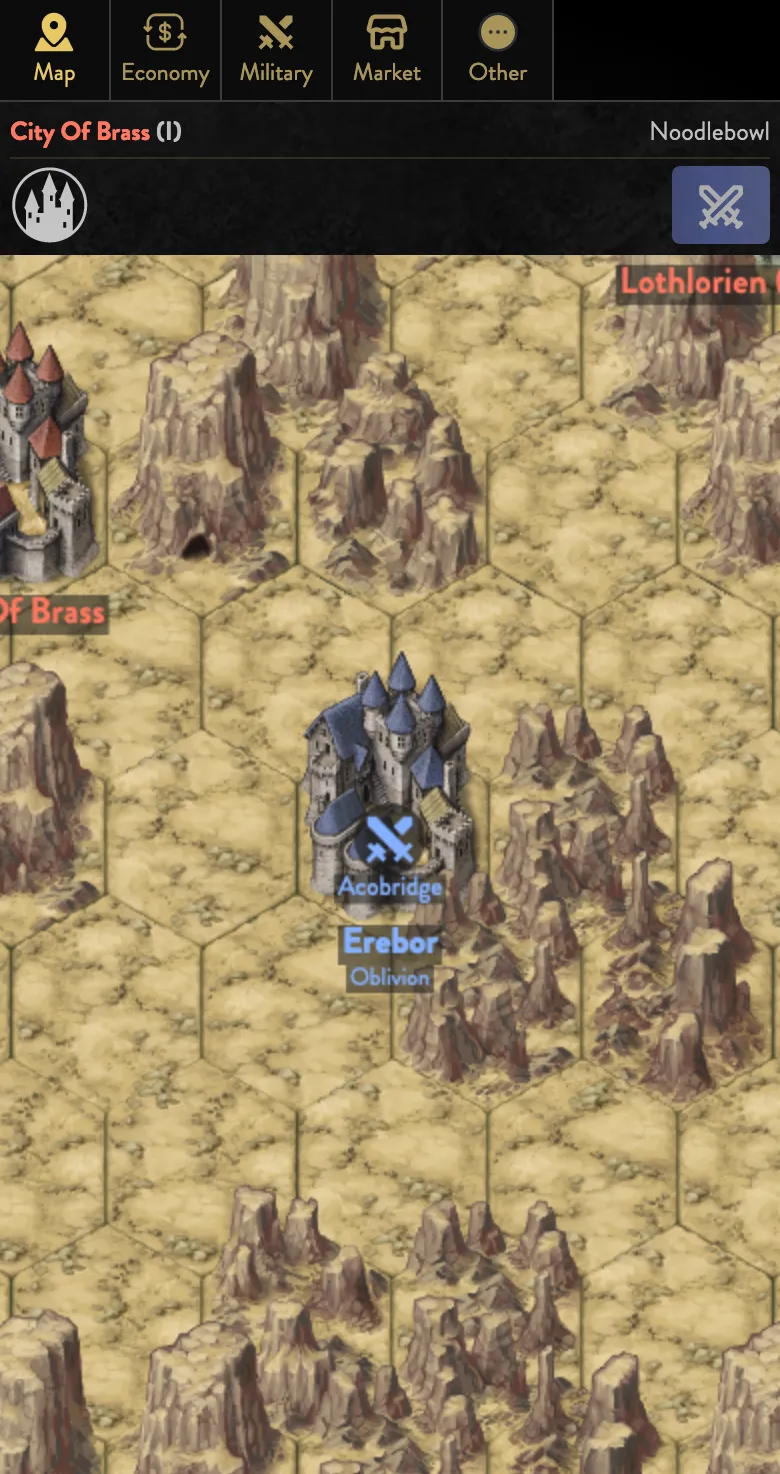
Buildings and units no longer cost gold, and a city's gates can be opened or closed.
New players are protected from attack for at least 24 hours, and high scores arrive.
Guilds can accept members automatically, worlds can restart, and the game has breadcrumbs.
The map loads in under 2 seconds instead of over 30, and morale counts in battle power.
The website gets illustrations, and the game gains morale and economy and military science.
City attack and defence logic, a fix to the building and troop queues, and refactoring.
The market shows an icon for each resource, and the chat page has a new design.
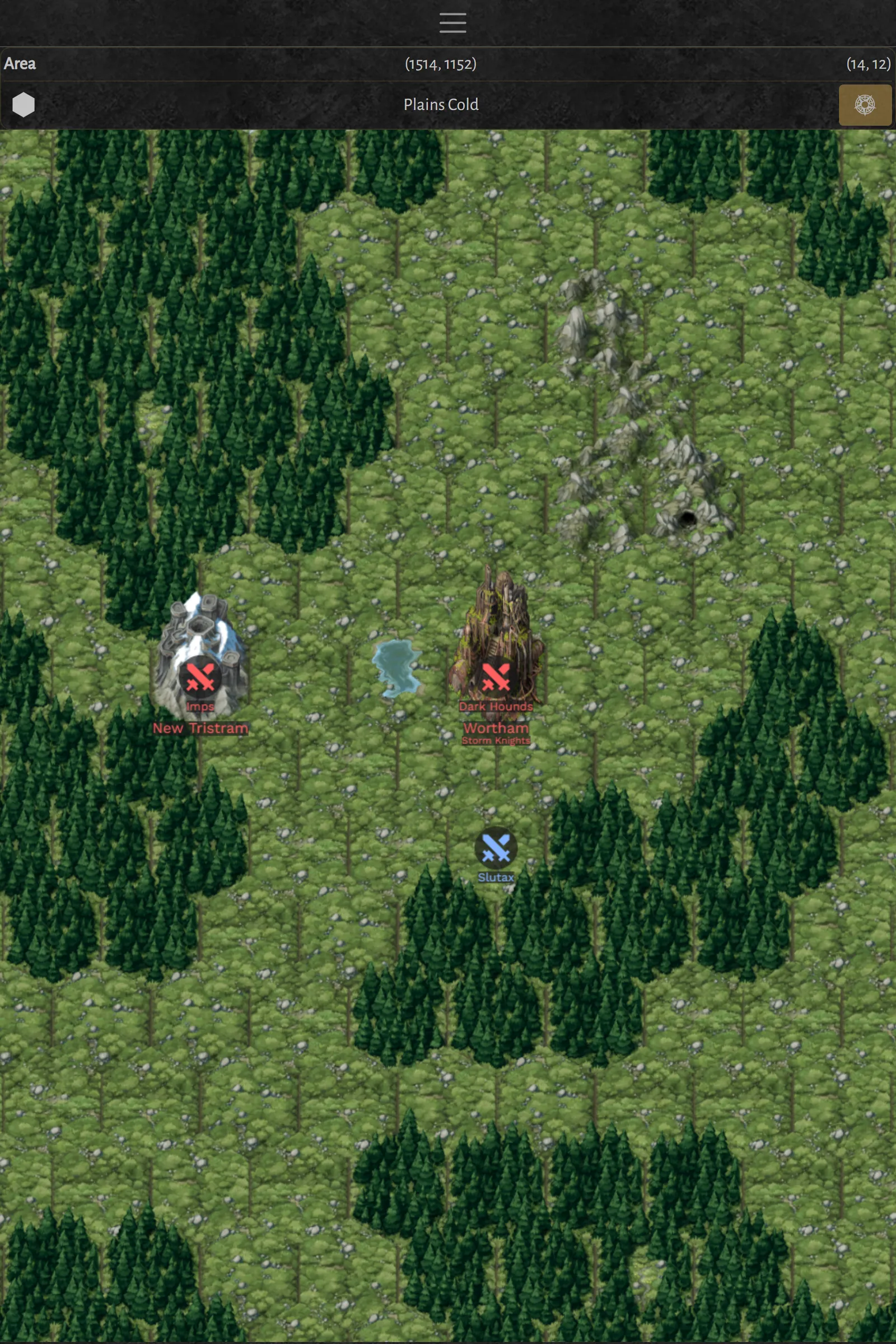
The game's interface now matches the website: darker and more fantasy-themed.
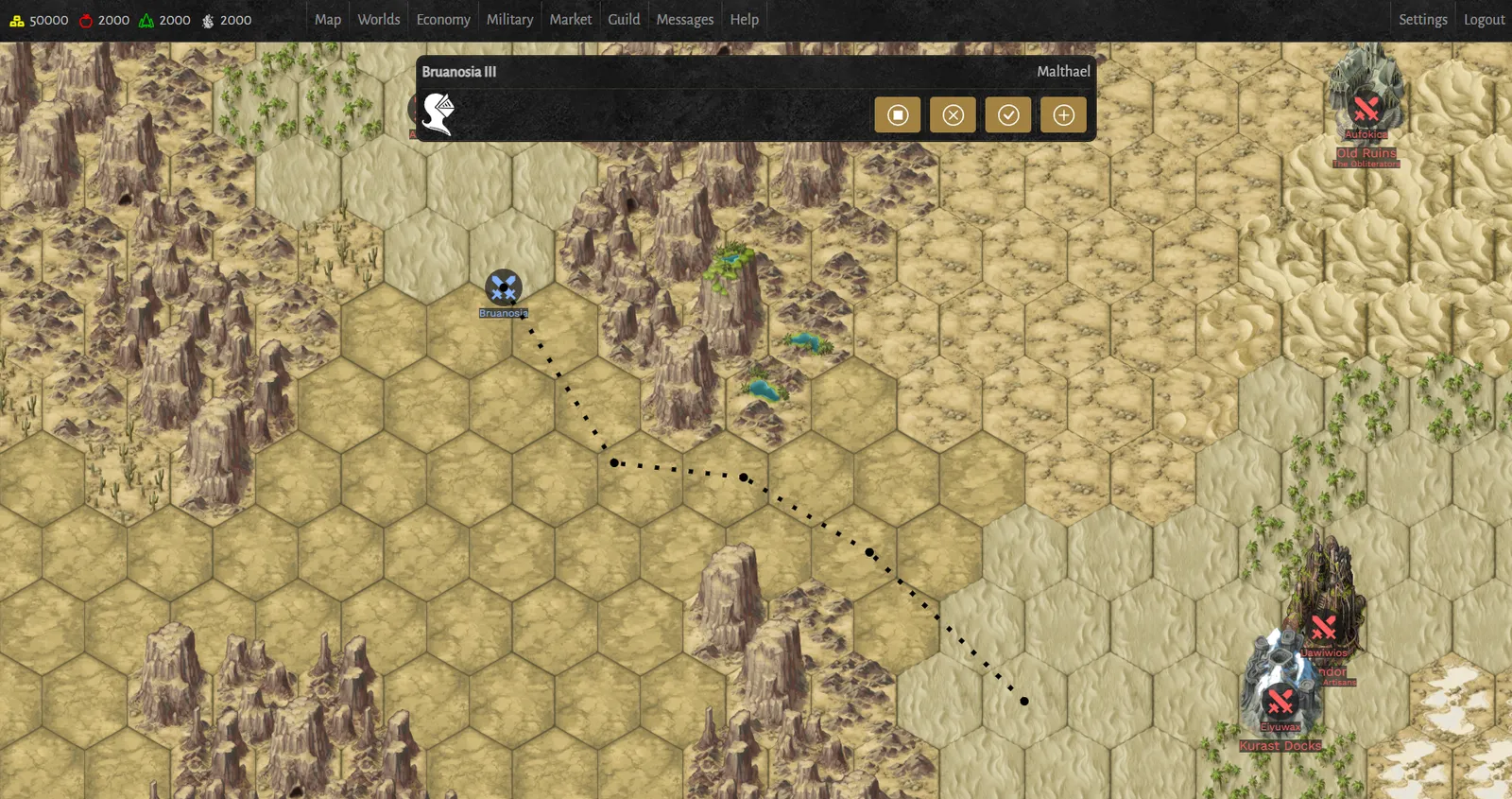
The website has a new design, with the development news on their own page.
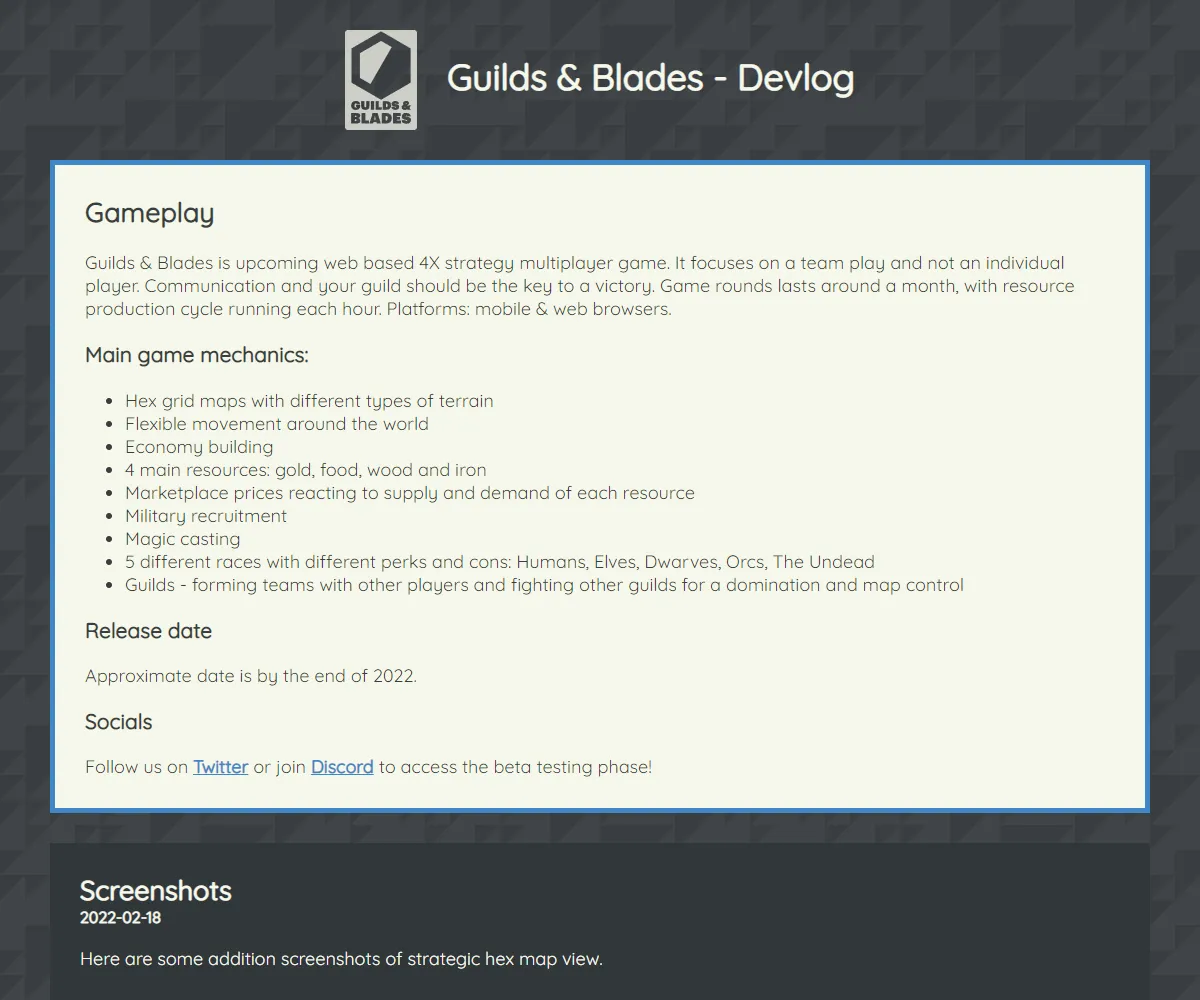
You can prepare an attack on a city and see your chance to win, and create an army.
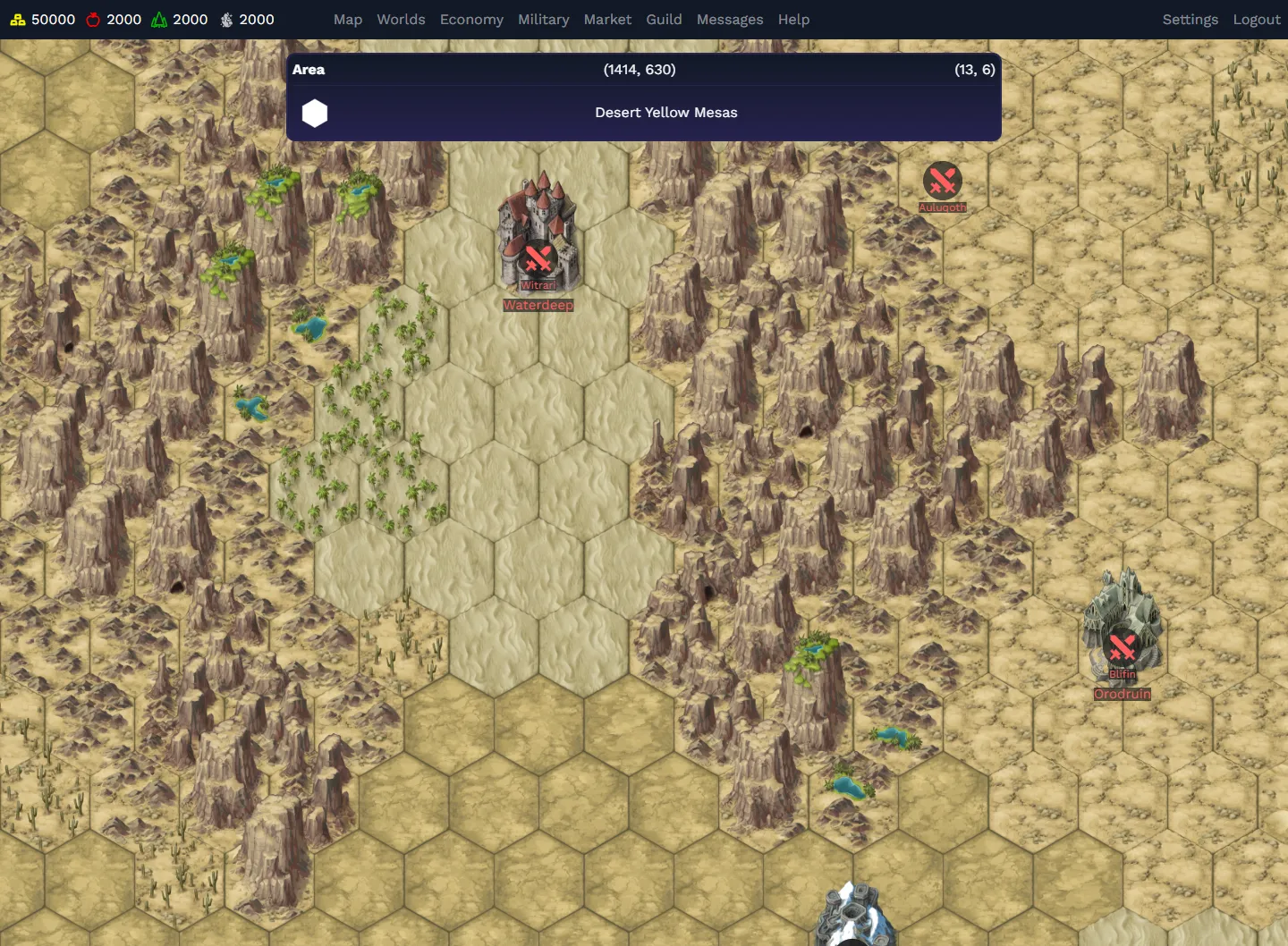
Armies and cities carry titles on the map, and you can attack an army within range.
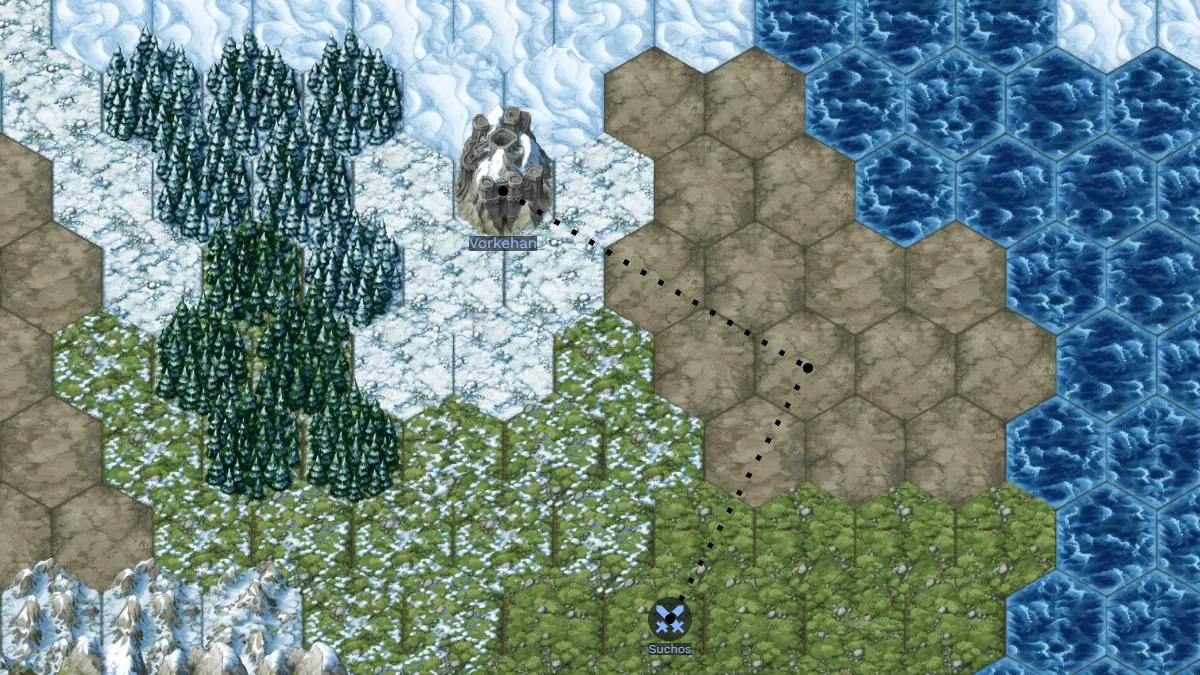
The map editor sets the map's size and imports maps, and tropical and ocean tiles arrive.
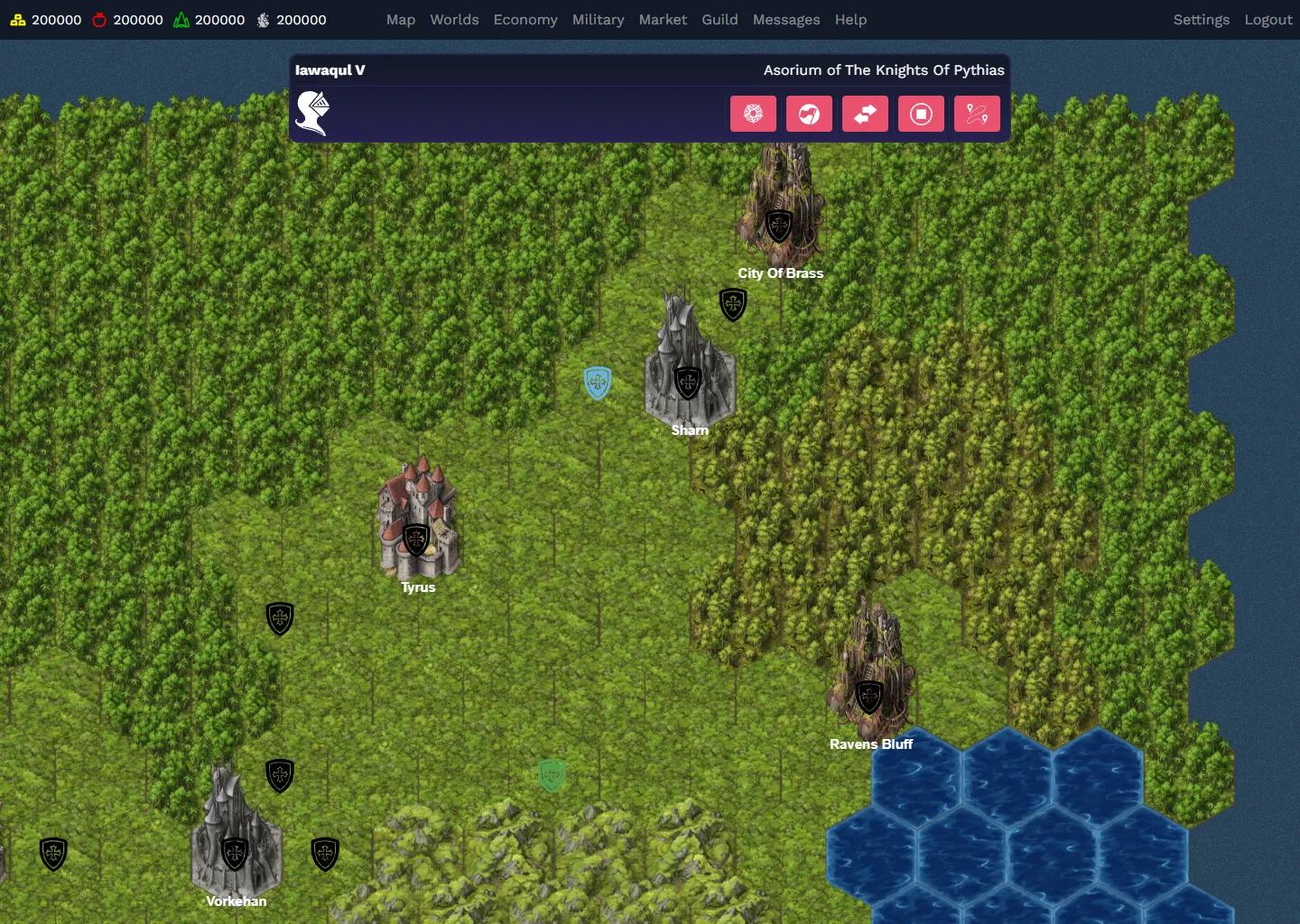
New icons for the map's action buttons and the resources, and tweaked colours and styles.

The colours change to a purple placeholder palette that is easier to tweak later.
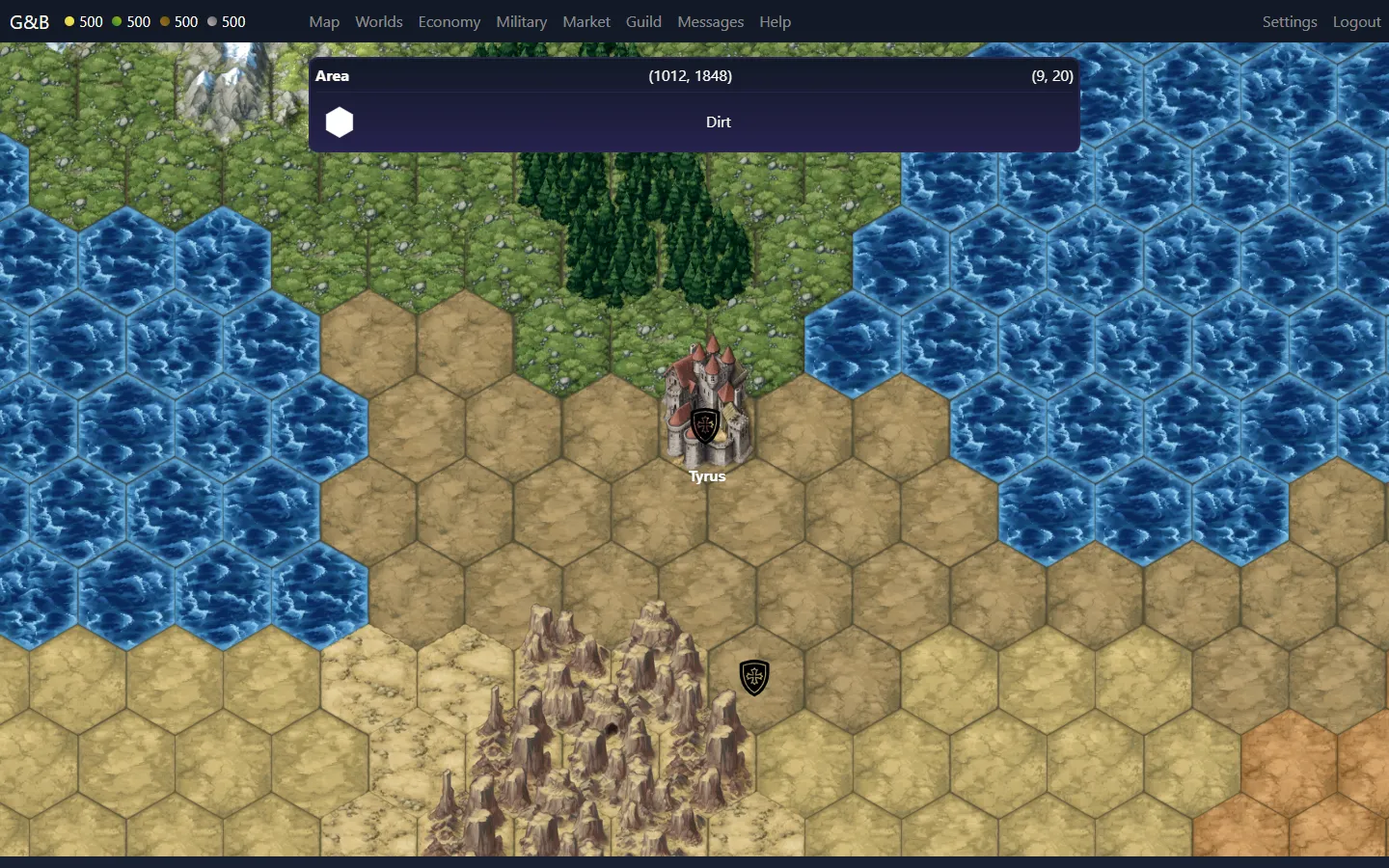
Guilds & Blades, a 4X strategy game for the web browser, gets a developer log.